
Man vs. Faith: The Problem of Luck and Sin
The Old Man and the SeaSantiago grapples with questions of luck, sin, and religious faith, seeking meaning in his suffering.
increasing Bearing strength in each event
 decreasing
Bearing strength in each eventdecreasingThe Promise to the Virgin
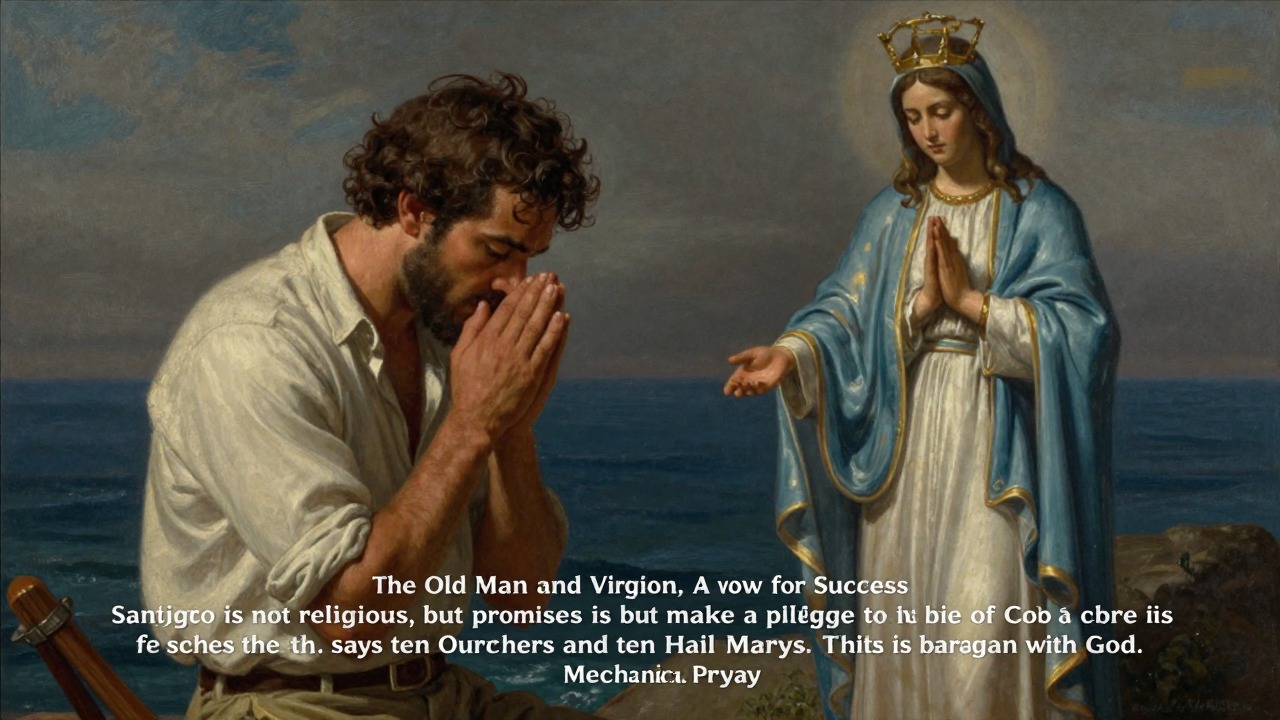
The Promise to the Virgin
A Vow for Success
Santiago is not religious, but he promises to make a pilgrimage to the Virgin of Cobre if he catches the fish. He says ten Our Fathers and ten Hail Marys. This is a bargain with God.
The Mechanical Prayer
He is too tired to pray with concentration. He says the words mechanically. He feels better after praying, but the suffering continues. His faith is pragmatic, not deep.
This conflict between belief and action is part of his ordeal.
The Question of Sin
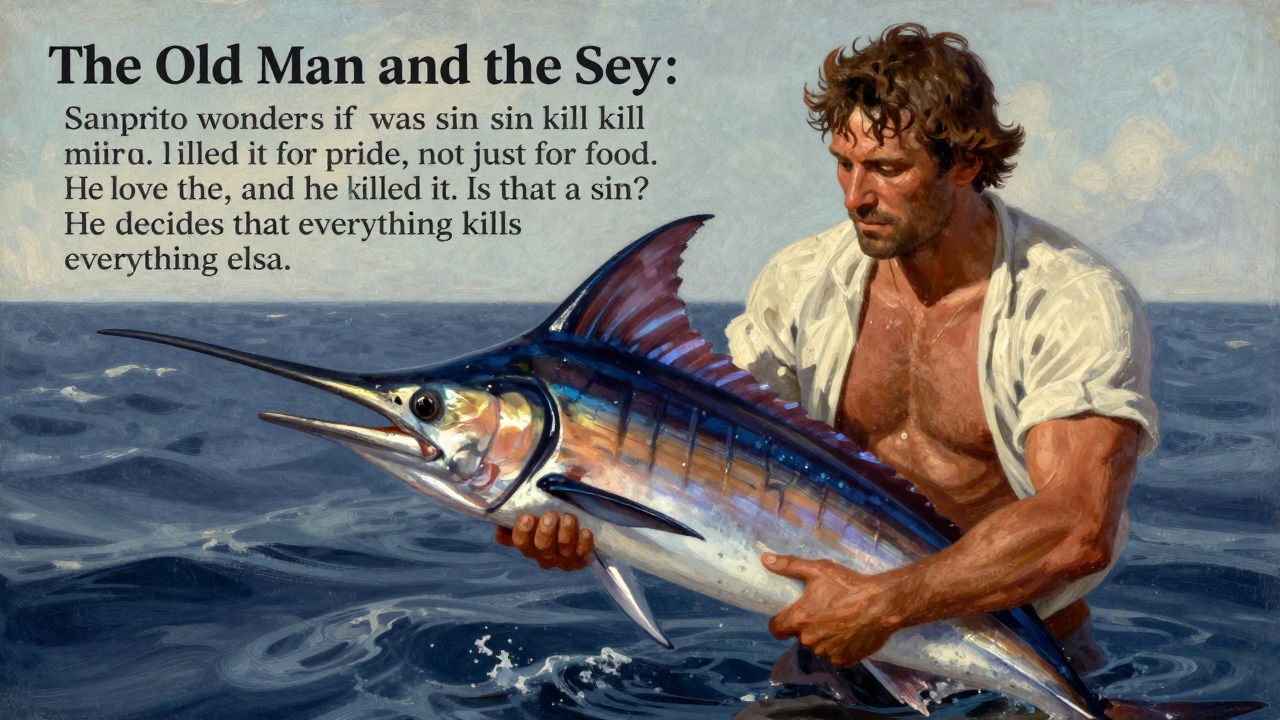
The Question of Sin
Killing the Fish
Santiago wonders if it was a sin to kill the marlin. He killed it for pride, not just for food. He loved the fish, and he killed it. Is that a sin? He decides that everything kills everything else.
The Nature of Sin
He thinks about sin and decides he does not understand it. He is a fisherman, born to fish. The fish was born to be a fish. There is no sin in that. But he is not sure.
This internal conflict reflects his moral struggle.
The Acceptance of Fate
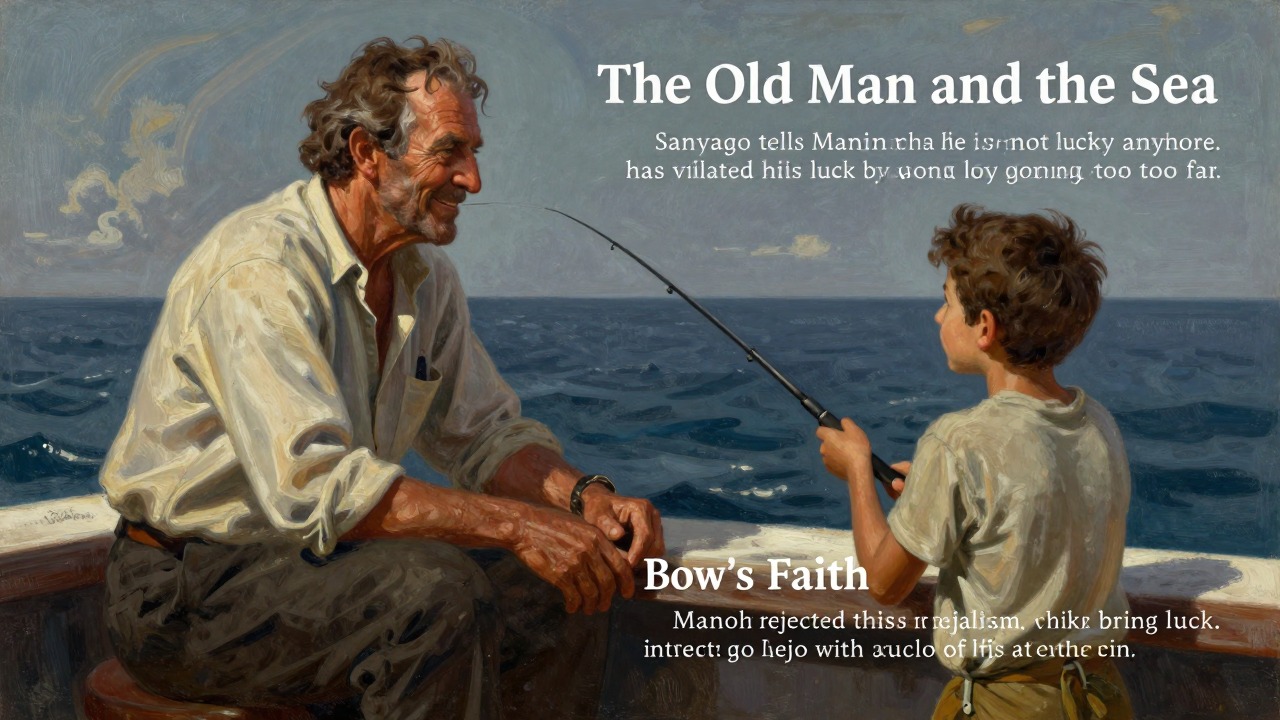
The Acceptance of Fate
No Luck Left
Santiago tells Manolin he is not lucky anymore. He has violated his luck by going out too far. He accepts his defeat as a consequence of his own actions.
The Boy's Faith
Manolin rejects this fatalism. He will bring luck. He will fish with the old man again. The conflict between Santiago's resignation and Manolin's hope is resolved by the boy's loyalty.
Santiago's faith in himself is partially restored by the boy's love.
the second day at sea
the third day, after the shark attack
after the return
